
Hosea 7
The Tragedy of Seeing Everything Except Your Own Sin

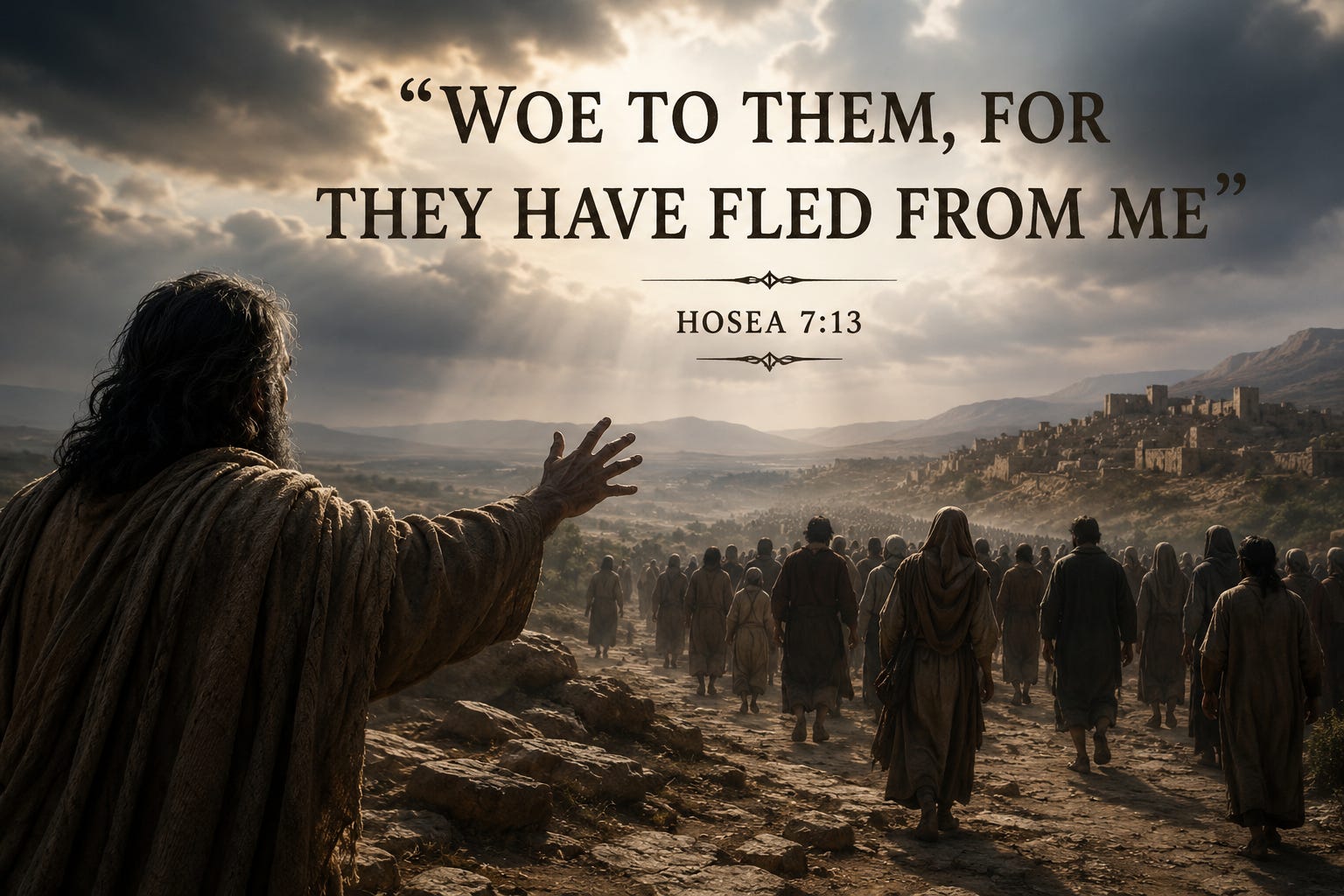
““When I would have healed Israel, Then the iniquity of Ephraim was uncovered, And the wickedness of Samaria. For they have committed fraud; A thief comes in; A band of robbers takes spoil outside. They do not consider in their hearts That I remember all their wickedness; Now their own deeds have surrounded them; They are before My face. They make a king glad with their wickedness, And princes with their lies. “They are all adulterers. Like an oven heated by a baker— He ceases stirring the fire after kneading the dough, Until it is leavened. In the day of our king Princes have made him sick, inflamed with wine; He stretched out his hand with scoffers. They prepare their heart like an oven, While they lie in wait; Their baker sleeps all night; In the morning it burns like a flaming fire. They are all hot, like an oven, And have devoured their judges; All their kings have fallen. None among them calls upon Me. “Ephraim has mixed himself among the peoples; Ephraim is a cake unturned. Aliens have devoured his strength, But he does not know it; Yes, gray hairs are here and there on him, Yet he does not know it. And the pride of Israel testifies to his face, But they do not return to the Lord their God, Nor seek Him for all this. “Ephraim also is like a silly dove, without sense— They call to Egypt, They go to Assyria. Wherever they go, I will spread My net on them; I will bring them down like birds of the air; I will chastise them According to what their congregation has heard. “Woe to them, for they have fled from Me! Destruction to them, Because they have transgressed against Me! Though I redeemed them, Yet they have spoken lies against Me. They did not cry out to Me with their heart When they wailed upon their beds. “They assemble together for grain and new wine, They rebel against Me; Though I disciplined and strengthened their arms, Yet they devise evil against Me; They return, but not to the Most High; They are like a treacherous bow. Their princes shall fall by the sword For the cursings of their tongue. This shall be their derision in the land of Egypt.” Hosea 7:1-16
The Sin God Still Sees
“When I would have healed Israel, then the iniquity of Ephraim was uncovered, and the wickedness of Samaria…” Hosea 7:1
The opening words of Hosea 7 are among the most tragic in the entire book. God declares that He desired to heal Israel, yet when He approached them with restoration, their sin was exposed instead.
To understand the force of this passage, we must first understand the names Hosea uses. “Israel” refers to the northern kingdom that existed after the kingdom divided following Solomon’s reign. “Ephraim,” the dominant tribe of the north, became a common name for the entire nation. “Samaria” was the capital city and political center of that kingdom. By mentioning all three, Hosea is showing that corruption had spread everywhere, from the people, to the tribes, to the halls of power.
God says that He would have healed them, but instead their wickedness was uncovered. This is often what happens when divine light shines upon human hearts. God’s presence reveals the heart. The people of Israel had become so accustomed to their rebellion that they no longer considered that God remembered every deed they had committed.
“They do not consider in their hearts that I remember all their wickedness.” Hosea 7:2
What a sobering statement. Israel lived as though God had forgotten. They assumed that because judgment had not immediately fallen, their actions had escaped His notice. Yet the Lord reminds them that nothing is hidden from His sight. Their sins surrounded them, standing continually before His face.
There is a timeless warning here. Sin often deceives us into believing that if enough time passes, the offense no longer matters. We convince ourselves that because a wrong has not been addressed, it has somehow disappeared. People frequently do this in their relationships as well. They wound others, refuse to acknowledge the injury, justify their behavior, and then proceed as though nothing ever happened. They desire reconciliation without repentance.
While human memory is imperfect, the principle remains. We often act as though offenses vanish simply because we choose not to think about them. Yet God is not forgetful. His patience should never be mistaken for ignorance. What Israel failed to consider was that the Lord saw everything and remembered everything.
“They make a king glad with their wickedness, and princes with their lies.” Hosea 7:3
The leaders benefited from the sins of the people. Wickedness had become profitable. Lies were rewarded. Corruption was not confined to a few bad actors; it had infected the entire system. The rulers enjoyed what should have grieved them, and the people supplied the very evil their leaders desired.
Hosea then introduces one of his most vivid images:
“They are all adulterers. Like an oven heated by a baker…” Hosea 7:4
The imagery seems strange. Yet in the ancient world, a baker would heat an oven until it retained tremendous amounts of heat. Once prepared, the fire required little attention because the oven itself continued radiating the energy stored within it.
This is Hosea’s picture of Israel’s heart.
The issue is not merely sexual immorality, though that was certainly present. Throughout Hosea, adultery is primarily a picture of unfaithfulness. Israel had abandoned the Lord and pursued idols. Their hearts burned with desires that were no longer restrained by devotion to God.
The oven imagery reveals something even deeper. Israel no longer required much external temptation. The fire was already burning within. Their sin had become self-sustaining. Sin had moved from an occasional act to a settled condition of the heart.
This is the terrifying progression of rebellion. At first, a person must be enticed into sin. Eventually, sin becomes so deeply rooted that the heart itself generates the desire. The oven remains hot even when no one is actively tending the flames.
Hosea begins this chapter by exposing a nation that still wanted God’s blessings but no longer desired His holiness. God came offering healing, yet what He uncovered was a people whose hearts had become an oven of unchecked desire, burning continuously before His face.
The Fire Beneath the Surface
“In the day of our king princes have made him sick, inflamed with wine; he stretched out his hand with scoffers.” Hosea 7:5
The corruption that Hosea exposed in the opening verses now moves into the halls of power. The prophet turns our attention to the king, his princes, and the spiritual decay that had consumed Israel’s leadership.
The phrase “in the day of our king” likely refers to a royal celebration or gathering within the king’s court. Rather than depicting a righteous ruler governing his people with wisdom, Hosea paints a picture of leaders given over to indulgence and corruption. The princes make the king “sick” with wine. This may describe literal drunkenness, but it also symbolizes a deeper intoxication. The leaders of Israel had become drunk on power and self-interest.
The king was not surrounded by wise counselors who feared the Lord. Instead, he stretched out his hand to scoffers. In the ancient world, extending one’s hand often symbolized fellowship and partnership. The king willingly joined himself to those who mocked righteousness. He welcomed the wicked into his inner circle and found companionship among those who had no regard for God.
This should not surprise us, for the heart of the nation had already been compared to an oven.
“They prepare their heart like an oven, while they lie in wait…” Hosea 7:6
Notice that Hosea is continuing the same imagery introduced earlier. The oven has not cooled. The fire still burns beneath the surface.
The people prepare their hearts for sin. They nurture it. They plan for it. They wait for the right opportunity to act upon it.
The prophet then introduces a fascinating detail:
“Their baker sleeps all night; in the morning it burns like a flaming fire.” Hosea 7:6
The baker is not extinguishing the fire. He sleeps because the oven no longer requires attention. The heat remains throughout the night, growing stronger beneath the surface.
This is Hosea’s description of hidden sin.
Outwardly, everything appears calm. The conspirator goes to bed. The schemer waits patiently. The ambitious man hides his intentions. Yet underneath, the fire continues to burn. Pride, lust, greed, envy, and hatred quietly smolder within the heart.
Then morning comes.
Many great acts of wickedness do not begin in a moment. They begin as small fires that are fed and protected until they eventually consume everything around them.
Hosea then reveals the result of this burning corruption:
“They are all hot, like an oven, and have devoured their judges; all their kings have fallen. None among them calls upon Me.” Hosea 7:7
During Hosea’s lifetime, the northern kingdom experienced political chaos. Kings rose and fell through violence and assassination. Men sought power through conspiracy. The burning passions of ambition and self-interest consumed rulers and kingdoms alike.
Yet perhaps the saddest statement in the passage is the simplest:
“None among them calls upon Me.”
Everyone had a plan. Everyone had an agenda. Everyone had an opinion.
No one sought the Lord.
Israel attempted to solve spiritual problems through political maneuvering, human wisdom, and personal ambition. The one thing they would not do was repent.
“Ephraim has mixed himself among the peoples; Ephraim is a cake unturned.” Hosea 7:8
The issue was not that Israel interacted with other nations. The problem was that Israel had adopted their values and way of life. God’s covenant people were meant to be distinct among the nations, yet they had become indistinguishable from them.
To illustrate this tragedy, Hosea uses another vivid image. A cake baked on a hot stone had to be turned. If left untouched, one side would become burned while the other remained raw. The result was a ruined cake, neither properly cooked nor fit for use.
This was Israel’s spiritual condition.
Burned by pagan influence on one side.
Raw in their devotion to God on the other.
They were neither faithful to Yahweh nor successful in their pursuit of the world. They had lost the distinct identity God had given them.
Sin begins as a hidden fire within the heart. That fire is nurtured and protected until it erupts into destructive action. The destruction spreads through families, leaders, and nations. Eventually, a people lose their spiritual identity altogether.
The Danger of Not Knowing
“Aliens have devoured his strength, but he does not know it; yes, gray hairs are here and there on him, yet he does not know it.” Hosea 7:9
One of the most frightening truths in Scripture is that a person can be perishing without realizing it.
Hosea describes a nation whose strength has been slowly consumed by foreign powers. Israel had placed its confidence in alliances and political maneuvering rather than in the Lord. The very nations they trusted were draining their vitality. Their strength was disappearing little by little.
Yet Hosea repeats the same phrase twice:
“He does not know it.”
The tragedy was that Israel was weak and blind to its weakness.
To illustrate this reality, Hosea points to gray hair. Gray hairs do not appear all at once. They arrive gradually, revealing a process that has been occurring beneath the surface for years. In the same way, spiritual decline rarely happens overnight. A hardened heart is usually the result of countless small compromises and repeated acts of disobedience.
Yet they convinced themselves that everything was fine.
This remains one of sin’s most dangerous characteristics. It not only corrupts but it also blinds. It convinces a person that they are healthy while their soul is growing sick.
Many have watched this tragedy unfold in people they love. Family members see the warning signs. Friends recognize the destructive patterns. The consequences become increasingly obvious to everyone around them. Yet the person trapped in sin often refuses to acknowledge what is happening.
Pride becomes a veil over the eyes.
“And the pride of Israel testifies to his face, but they do not return to the Lord their God, nor seek Him for all this.” Hosea 7:10
The evidence stood directly before them, but pride would not allow them to see it.
The Lord had provided warning after warning. Their weakening condition should have driven them to repentance. Instead, it drove them deeper into stubbornness.
“Ephraim also is like a silly dove, without sense—they call to Egypt, they go to Assyria.” Hosea 7:11
The dove is criticized for its foolishness.
It flutters from place to place seeking safety.
It reacts without wisdom.
It is easily deceived and easily trapped.
Israel behaved in much the same way. Rather than trusting the Lord, they ran from one foreign power to another. They looked to Egypt for help. They looked to Assyria for protection. They sought rescue everywhere except from the God who had delivered them time and time again.
The dove believed it was escaping danger.
God says otherwise.
“Wherever they go, I will spread My net on them; I will bring them down like birds of the air.” Hosea 7:12
The bird imagines itself free as it moves through the sky, unaware that a net awaits below. Israel believed they were securing their future. In reality, every attempt to save themselves apart from God only carried them further into judgment.
The same principle remains true today. Sin often traps people through the very things they believe will save them. Pride promises strength but produces weakness. Self-reliance promises freedom but leads to bondage. Worldly solutions offer comfort while quietly drawing the heart farther from God.
Israel’s downfall began long before the judgment arrived.
It began when they stopped seeing.
It continued when they refused to listen.
And it ended when they would not return to the Lord.
The saddest part of Hosea’s warning is that the Lord was never the one who moved away. He remained ready to receive His people. Yet they were so consumed with looking everywhere else for help that they never lifted their eyes toward Him.
They Wanted Relief, Without Repentance
“Woe to them, for they have fled from Me! Destruction to them, because they have transgressed against Me! Though I redeemed them, yet they have spoken lies against Me.” Hosea 7:13
The chapter closes with God’s summary of Israel’s condition.
Throughout Hosea 7, the Lord has described a people consumed by sin, blind to their weakness, and unwilling to seek Him. Now He explains the root issue.
They had fled from Him.
God does not describe Israel as merely drifting away. Their departure was intentional. They had repeatedly chosen other gods, other nations, and other sources of security instead of the Lord who had redeemed them.
Yet God reminds them of something they seem to have forgotten:
“Though I redeemed them…”
The Lord had rescued Israel from Egypt. He delivered them from slavery, established them as a nation, protected them, and provided for them. Everything Israel possessed ultimately came from God’s mercy.
Yet instead of responding with gratitude and faithfulness, they spoke lies against Him.
This has been a recurring theme throughout Hosea. Israel enjoyed the blessings God provided while forgetting the God who provided them.
The Lord then exposes another problem.
“They did not cry out to Me with their heart when they wailed upon their beds.” Hosea 7:14
The people were certainly crying. They were distressed. They were suffering. They were concerned about their circumstances.
But there is a difference between crying because of consequences and crying out to God in genuine repentance.
They wanted relief from their troubles, but they did not truly want the Lord.
The second half of the verse helps explain this:
“They assemble together for grain and new wine, they rebel against Me.”
Their concern was primarily material. They gathered because they wanted crops, prosperity, and provision. Their focus remained on what they could receive rather than on restoring their relationship with God.
The Lord continues:
“Though I disciplined and strengthened their arms, yet they devise evil against Me.” Hosea 7:15
This is another reminder that everything Israel possessed ultimately came from God.
Yet they used the very blessings He provided in service of rebellion.
“They return, but not to the Most High; they are like a treacherous bow.” Hosea 7:16
A bow is supposed to send an arrow toward its intended target. A faulty bow cannot be trusted because it fails to accomplish its purpose.
As a result, judgment would continue to fall upon the nation and its leaders.
When we step back and look at Hosea 7 as a whole, one theme repeatedly appears. Israel consistently looked everywhere except to the Lord.
They trusted kings. They trusted foreign nations. They trusted idols. They trusted themselves. Yet they would not trust God.
This chapter serves as a warning because the same temptation still exists today. It is possible to recognize problems in our lives while refusing to address the deeper spiritual issue. It is possible to want relief without repentance. It is possible to seek God’s blessings while neglecting God Himself.
The good news is that the Lord’s character has not changed. The God who redeemed Israel is the same God who provides redemption through Jesus Christ. Israel repeatedly failed to return to the Lord, but the gospel announces that Christ came to save sinners who could not save themselves.
Hosea 7 shows us the danger of a heart that continually resists God. The answer is not found in trying harder or looking elsewhere for help. The answer is found where Israel should have looked all along: in the Redeemer who calls His people to return to Him.
Honestly, the more I read (currently working through 2 Kings) of Israel’s decline, the more annoyed I grow with them. And that is just my perspective: a person from the 21st century, trying to understand the motives behind their actions. Then I wonder about God’s divine patience with those people. And I’m grateful for that patience because eventually some people do turn back to God. Which gives me hope that many more people will in this age as well.