Hosea 10
God does not merely judge sinful actions; He dismantles the idols that sinners trust in.

“Israel is a luxuriant vine; He produces fruit for himself. The more abundant his fruit, The more altars he abounded; The better his land, The better he made the sacred pillars. Their heart is faithless; Now they must bear their guilt. Yahweh will break down their altars And destroy their sacred pillars. ¶Surely now they will say, “We have no king, For we do not fear Yahweh. As for the king, what can he do for us?” They speak mere words; With worthless oaths they cut covenants; And judgment flourishes like gall in the furrows of the field. The dweller of Samaria will fear For the calf of Beth-aven. Indeed, its people will mourn for it, And its idolatrous priests will cry out over it, Over its glory, since it has gone into exile from them. The thing itself will be carried to Assyria As tribute to King Jareb; Ephraim will receive shame, And Israel will be ashamed of its own counsel. Samaria will be ruined with her king Like a stick on the surface of the water. Also the high places of Aven, the sin of Israel, will be eradicated; Thorn and thistle will grow on their altars; Then they will say to the mountains, “Cover us!” And to the hills, “Fall on us!” From the days of Gibeah you have sinned, O Israel; There they stand! Will not the battle against the sons of injustice overtake them in Gibeah? When it is My desire, I will chastise them; And the peoples will be gathered against them When they are bound for their double guilt. ¶And Ephraim is a trained heifer that loves to thresh, But I will come over her fair neck with a yoke; I will harness Ephraim; Judah will plow; Jacob will harrow for himself. Sow with a view to righteousness, Reap in accordance with lovingkindness; Break up your fallow ground, Indeed, it is time to seek Yahweh Until He comes and rains righteousness on you. You have plowed wickedness; you have reaped injustice; You have eaten the fruit of deception. Because you have trusted in your way, in your abundant warriors, Therefore a rumbling will arise among your people, And all your fortifications will be destroyed, As Shalman destroyed Beth-arbel on the day of battle, When mothers were dashed in pieces with their children. Thus it will be done to you at Bethel because of your evil of evils. At dawn the king of Israel will be completely ruined.” Hosea 10:1-15
Prosperity That Fed Idolatry
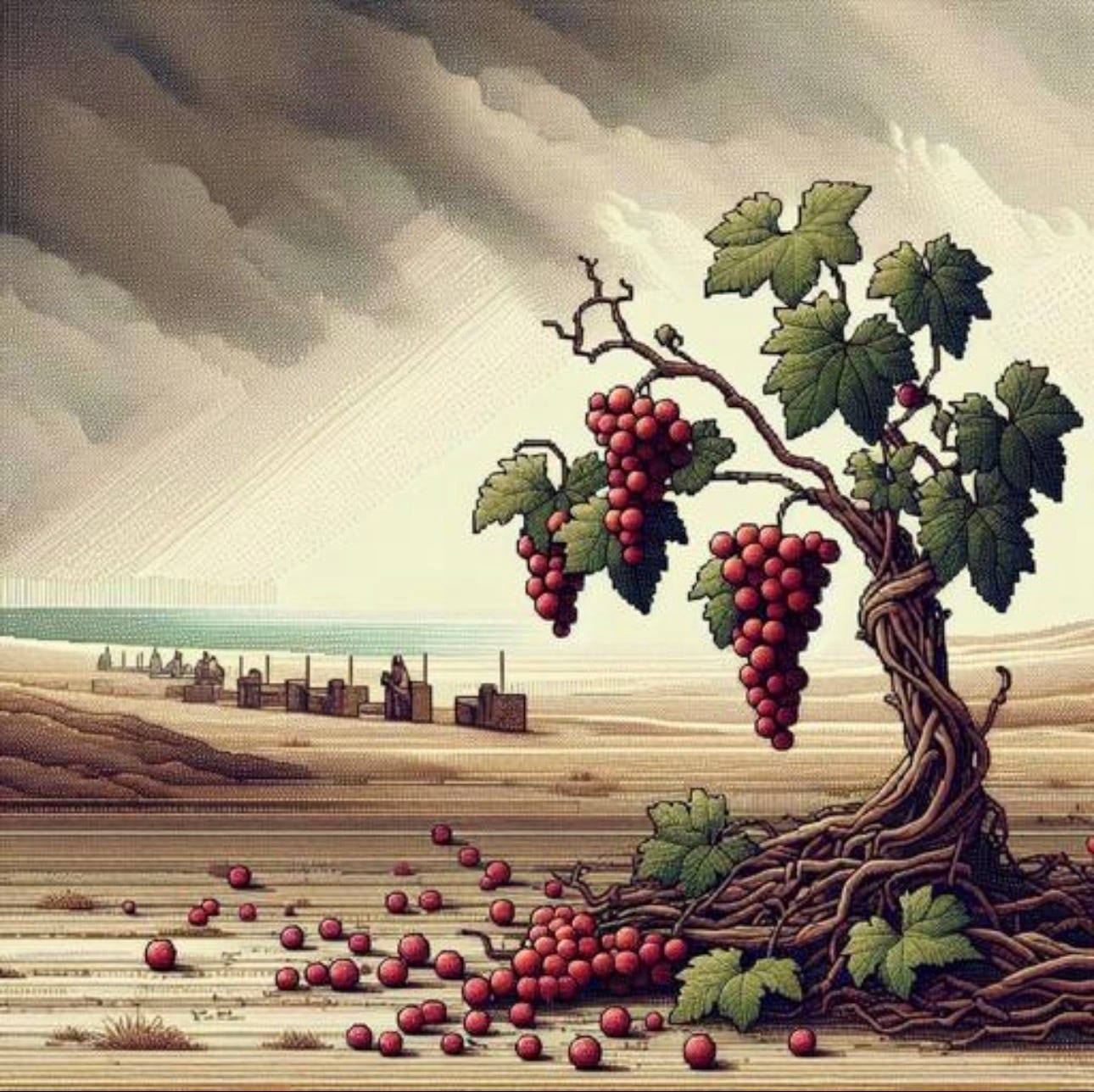
“Israel is a luxuriant vine; He produces fruit for himself. The more abundant his fruit, The more altars he abounded; The better his land, The better he made the sacred pillars. Their heart is faithless; Now they must bear their guilt. Yahweh will break down their altars And destroy their sacred pillars.” Hosea 10:1-2
Israel was flourishing. Hosea describes her as a luxuriant vine overflowing with fruit. This sounds like God’s blessing, but Hosea immediately exposes the truth: “He produces fruit for himself.” The abundance God gave became fuel for self-interest and false religion.
The more Israel prospered, the more altars they built. The richer the land became, the more sacred pillars they erected to idols. God’s gifts were being used to dishonor the very God who had given them. Prosperity had become an occasion for independence.
The issue is not their wealth but their hearts. Hosea says, “Their heart is faithless.” A divided heart will always misuse God’s blessings because it loves the gifts more than the Giver.
Therefore, the Lord declares that He will tear down their altars and destroy their sacred pillars. The judgment fits the sin. Israel trusted in what they had built instead of the God who had blessed them, so God would remove the very things in which they placed their confidence.
Prosperity is not dangerous because of what it gives us, but because of what it can slowly convince us we no longer need. Every blessing should lead us to worship. When it leads us to ourselves, it has become an idol.
Empty Leadership Flows from Empty Hearts
“Surely now they will say, “We have no king, For we do not fear Yahweh. As for the king, what can he do for us?” They speak mere words; With worthless oaths they cut covenants; And judgment flourishes like gall in the furrows of the field.” Hosea 10:3-4
Having exposed Israel’s divided heart, Hosea now shows us the consequences. The people lament, “We have no king, for we do not fear Yahweh.” This is spiritual confession. Their greatest problem was never the quality of their rulers but the condition of their hearts. A nation that refuses to fear God cannot expect lasting security from earthly kings.
Their statement, “As for the king, what can he do for us?” exposes the emptiness of human leadership apart from God. They had looked to kings for protection, prosperity, and even peace, yet no king could save a people who had abandoned Yahweh. Earthly rulers are powerless to fix what is fundamentally a spiritual problem.
Then we see the character of the nation. “They speak mere words; with worthless oaths they cut covenants.” Their promises had become empty, and their covenants carried no integrity. Truth had given way to deception, and faithfulness had been replaced by convenience. Their words no longer reflected hearts devoted to God.
The result: “Judgment flourishes like gall in the furrows of the field.” Instead of righteousness growing from the land God had blessed, bitterness and injustice sprang up like poisonous weeds. Sin always bears fruit. When truth is abandoned, corruption eventually spreads throughout a people.
The fear of the Lord is the foundation of every healthy society. When reverence for God disappears, leadership falters, promises lose their value, and justice becomes poisoned.
Idols Cannot Save Those Who Trust Them
“The dweller of Samaria will fear For the calf of Beth-aven. Indeed, its people will mourn for it, And its idolatrous priests will cry out over it, Over its glory, since it has gone into exile from them. The thing itself will be carried to Assyria As tribute to King Jareb; Ephraim will receive shame, And Israel will be ashamed of its own counsel.” Hosea 10:5-6
Hosea now turns to the golden calf at Beth-aven, a deliberate play on the name Bethel. Once known as the house of God, Hosea calls it the house of wickedness, showing how far Israel had fallen.
The people of Samaria fear losing their idol. They mourn over the calf and its departing “glory,” showing where their true devotion lies. Their hearts grieve more over the loss of a false god than over their broken covenant with the living God.
The idol they trusted cannot even save itself. It is carried away to Assyria as tribute to King Jareb, treated as spoil by Israel’s enemies. A god that must be carried away by men is no god at all. The object they believed would protect them becomes evidence of their defeat.
The wisdom they trusted apart from God leads only to humiliation. Every false refuge eventually collapses, exposing the emptiness of placing our confidence anywhere but in the Lord.
The same warning remains today. Whatever captures our trust more than God will eventually disappoint us. Idols promise security but cannot deliver it. Only the living God is able to save, while every substitute will one day leave its worshipers ashamed.
The Collapse of False Security
“Samaria will be ruined with her king Like a stick on the surface of the water. Also the high places of Aven, the sin of Israel, will be eradicated; Thorn and thistle will grow on their altars; Then they will say to the mountains, “Cover us!” And to the hills, “Fall on us!”” Hosea 10:7-8
A stick floating on water has no direction, no strength, and no ability to resist the current. In the same way, Israel’s king and kingdom would be swept away because they had placed their confidence in human strength rather than Yahweh.
The political and religious systems they trusted would both fall. The very places where they sought blessing would become places of abandonment: “Thorn and thistle will grow on their altars.”
The people who once trusted idols for protection would one day desire creation itself to hide them from the consequences of their rebellion.
This same imagery appears in the New Testament when Jesus speaks of the coming judgment Luke 23:30, and again in Revelation 6:16 as people cry out for the mountains and rocks to fall upon them. Yet no earthly refuge can protect humanity from standing before the righteous judgment of God.
The only refuge that remains is the Lord Himself.
The Persistence of Rebellion
“From the days of Gibeah you have sinned, O Israel; There they stand! Will not the battle against the sons of injustice overtake them in Gibeah? When it is My desire, I will chastise them; And the peoples will be gathered against them When they are bound for their double guilt.” Hosea 10:9-10
Hosea reaches back to Gibeah, a reference to one of Israel’s darkest moments of corruption and injustice in Judges 19–21. His point is that Israel’s rebellion is not new. The same pattern of sin that marked them in the past still remains. Generations have passed, but the heart of the nation has not changed.
God asks, “Will not the battle against the sons of injustice overtake them in Gibeah?” The answer is yes. Sin may appear to endure for a season, but it does not escape the judgment of God. The Lord is patient, but His patience is not approval.
“When it is My desire, I will chastise them.” Judgment belongs to God’s authority. Israel had trusted in kings, armies, and idols, but the Lord alone governs the rise and fall of nations. When He calls nations against them, no strength of their own can deliver them.
The phrase “double guilt” points to the depth of Israel’s rebellion. They were persistently unfaithful. They had received God’s covenant, His promises, and His blessings, yet repeatedly turned away.
A people can inherit a godly history and still become unfaithful in their own generation.
The Yoke of Discipline
“And Ephraim is a trained heifer that loves to thresh, But I will come over her fair neck with a yoke; I will harness Ephraim; Judah will plow; Jacob will harrow for himself. Sow with a view to righteousness, Reap in accordance with lovingkindness; Break up your fallow ground, Indeed, it is time to seek Yahweh Until He comes and rains righteousness on you.” Hosea 10:11-12
Hosea uses the image of a trained heifer to describe Israel. Ephraim was like an animal that enjoyed the easy work of threshing. It received the benefits without the burden.
But the Lord says, “I will come over her fair neck with a yoke.” Because Israel refused to serve Him willingly, they would experience the weight of correction. God’s discipline was meant to bring them back into submission to Him.
“Sow with a view to righteousness, reap in accordance with lovingkindness; break up your fallow ground.” The solution to Israel’s rebellion was not simply political reform or stronger leadership, it was and always will be, repentance. The hardened ground of their hearts needed to be broken so that God could once again cultivate righteousness within them.
“It is time to seek Yahweh until He comes and rains righteousness on you.” Israel needed more than external change; they needed the transforming presence of God. Only He could produce the righteousness they lacked.
The Harvest of Rebellion
“You have plowed wickedness; you have reaped injustice; You have eaten the fruit of deception. Because you have trusted in your way, in your abundant warriors, Therefore a rumbling will arise among your people, And all your fortifications will be destroyed, As Shalman destroyed Beth-arbel on the day of battle, When mothers were dashed in pieces with their children. Thus it will be done to you at Bethel because of your evil of evils. At dawn the king of Israel will be completely ruined.” Hosea 10:13-15
Hosea closes the chapter with a sobering reminder: we always reap what we sow. Israel had plowed wickedness, and the harvest was injustice. They had trusted in deception, human strength, and military power, but everything they depended on would fail.
The tragedy of Israel was that they trusted in the very things that could not save them. They trusted in their warriors, their fortifications, their kings, and their idols, while rejecting the God who had delivered them before.
The destruction that came upon them would reveal the emptiness of their confidence. Their strongholds would fall, their king would be removed, and the false security they built would collapse.
Yet Hosea’s warning is not only about Israel. It reveals a universal truth: every person is sowing something, and every person will one day reap the fruit of what they have planted. A life built apart from God may appear successful for a season, but it cannot stand before Him.
The same God who calls His people to repentance is the God who provides redemption. Israel needed a righteousness they could not produce, and so do we. The answer is not to simply try harder or build stronger defenses… it is to return to the Lord.
Jesus Christ came as the true and faithful Son, the One who bore the judgment we deserved and gives His righteousness to those who trust in Him. He is the only refuge that cannot be destroyed and the only foundation that will stand.
Today is the time to seek Yahweh. Turn from the false things we trust, surrender our hearts to Christ, and receive the righteousness that only He can provide. The harvest of sin leads to destruction, but the harvest of grace leads to life.
So much of our religion is performative. We trust in ourselves more than in the God who created us. Perhaps, if we just realized how short our lives are, we could get in touch with the God who saves and restores us and live out our lives differently. What our country needs at this hour is a healthy dose of humility. When we admit that we are not the source of our own success, it will be then that we will see God’s power. For when we are weak, God’s power makes us strong.